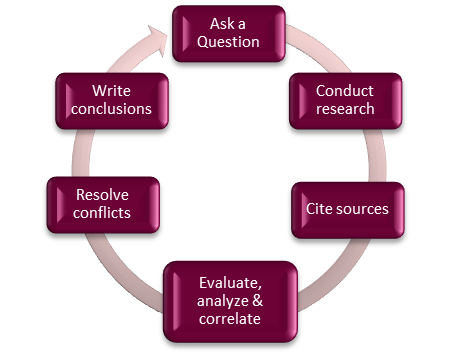
“I’d like to do my family history but I don’t know where to begin.”
Genealogy is like any journey, it begins with a single step. So let’s take your first step.
Decide what you want to learn:
It’s best to start with a specific goal, like ‘where was Grandpa born?’ or ‘who were Great-Grandma’s parents?’ Narrowing your focus will make the task less daunting. Starting with 1 individual or family is a good starting point.
Identify what you already know:
Use a Family Group Sheet to record what you know about the individual you are researching. These are available free on the internet or we have copies at our center.
https://www.familysearch.org/wiki/en/Family_group_record:_roadmap_for_researchers
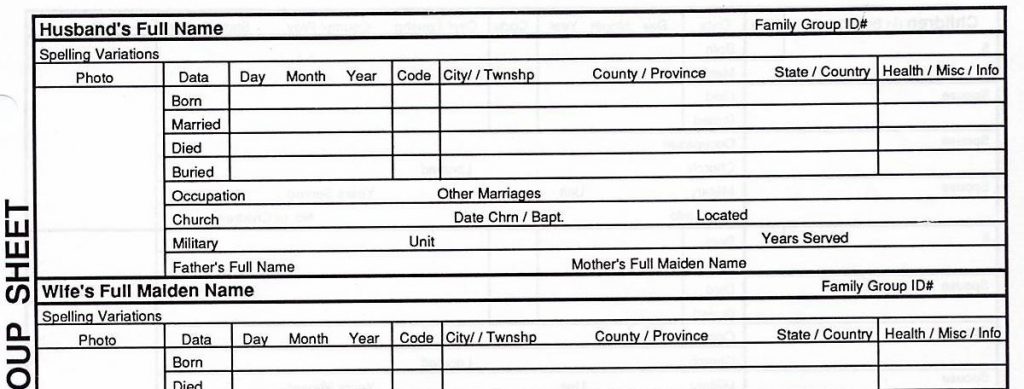
Record all the information you already have and where you got the data. Is it first-hand, personal knowledge? Did Grandma tell you her birthdate? Have you been to the cemetery where Grandpa is buried? It is important to record this because you may come across conflicting facts in your research and you need to determine the reliability of each source.
Discover what resources are available:
Myth#1 – Everything you need is on the internet.
While the internet is a vast repository of resources, everything is not online. Sometimes you will need to contact a local courthouse, archive, or church historian.
Myth#2 – You need to pay for a subscription to Ancestry to get any decent information.
There are lots of free sites full of genealogical information so you may get your research questions answered without any fees at all.
Myth#3 – All I need is a DNA test.
While you will get some answers with a DNA test, it will not answer everything. DNA testing companies will only suggest a relationship range and you will still need to do standard, paper based genealogy research to determine the actual connection. Genealogists consider it just another tool in the tool box when researching your family.
Myth#4 – Someone already did my family tree online, I can just copy their work.
So you found someone’s tree online and it answers your question. Awesome! But where did they get their information? Do they have sources? Do you believe everything you read on the internet? It’s best to double check any information with your own research before relying on an online tree.
The Family Search Wiki page is a good place to begin. It outlines what documents are available in each municipality or parish. This way you do not waste time, for example, searching for a birth certificate in 1870 when the state did not begin requiring them until 1910.
https://www.familysearch.org/wiki/en/Main_Page
Do the research:
Now let’s get down to business. Certainly begin with what you can find online. Use a search engine (like Google) with keywords like “1920 Census of McDonough County” or “Illinois Marriage Records”. Enter your ancestor’s name and county, sometimes you will get a hit on your specific person. Granted, the first few sites may lead you to Ancestry. But there are many free places to get information.
Examples:
Family Search
https://www.familysearch.org/search/collection/list?page=1®ion=UNITED_STATES
RootsWeb
Ilinois Digital Archives
http://www.idaillinois.org/cdm/
Illinois State Archives
http://www.cyberdriveillinois.com/departments/archives/databases/home.html
Chronicling America
https://chroniclingamerica.loc.gov/
See our Links page for other options. These will get you started. Also search our website surname list for information specific to McDonough County. You may then request a copy of the document for a small fee.
MCGS Links Page
Use a research log to keep track of where you have searched and what you found (or didn’t find).
https://www.familysearch.org/wiki/en/Research_Logs
Analyze your results:
Gather all the documents you collected. Likely you will not find the complete answer to your research question on one document. And you may have found some information that doesn’t match with other documents. What next?
Say you are trying to determine Great-Grandma’s birthdate. You have her death certificate, a photo of her tombstone, and her marriage license.
Make a table
| Source | Birth Date | Informant | Note |
| Death Certificate | 12 Nov 1857 | Husband | |
| Tombstone | Calculated: 12 Nov 1857 | ? | “Died April 4, 1927 age 69 Years, 4 Months, 23 days” |
| Marriage Certificate | 1855 | Herself | States age 18 at time of marriage 12 Dec 1873 |
The death certificate and tombstone agree on the birth date, likely the husband supplied the information for both, a reasonably reliable source. However, she states that she’s 18 at the time of her marriage in 1873 making her birth year 1855. As Grandma should be an expert on her own birthday, this conflict needs to be resolved or at least reasonably explained. Further documents need to be examined.
Add Census Records to your table:
| 1860 Census | 1857-1858 | Likely Parent | 2 years old |
| 1870 Census | 1857-1858 | Likely Parent | 12 years old |
| 1880 Census | 1857-1858 | Herself or Husband | 22 years old |
| 1900 Census | 1857 | Herself | Nov 1857 |
The census is generally taken during the summer months so Grandma wouldn’t have had her birthday yet, making her birth year 1857 in each case. One can safely resolve that Grandma lied about her age to get married without parental consent.
Do something similar with your documents. Do all the facts match? If not, remember that every time a document is touched by a human, there is potential for error. Examine the reliability of the informant of each record and determine who would more likely have first-hand knowledge of the fact. Think about why a person may have given incorrect information or how mistakes may have been incorporated. You may need to gather more documents.
Make your conclusion:
Has your question been answered? Yes? Great, finish up your family group sheet being sure to note your source of each bit of information. And start on a new question. No? Don’t give up so easily. Think again about what documents you may not have. Examine why you couldn’t find an answer. Are you looking in the wrong place? Are you making assumptions that may not be true? Ask questions at your local genealogy society. We are here to help get your research on the right track.